

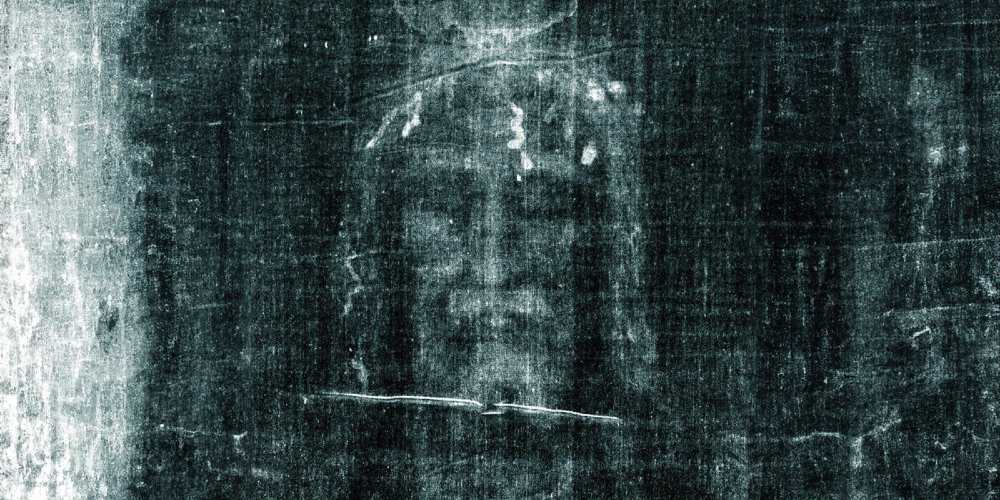
A recent study has revealed that the Shroud of Turin, a mysterious linen cloth bearing the image of a crucified man, may indeed be a 2,000-year-old relic believed by many to be the burial cloth of Jesus.
This finding contradicts previous studies that suggested it was much younger, adding weight to its significance as an ancient relic.
According to a report in Newsweek, the journal Heritage has published a study by Italian researchers attributing a two-millennia-old age to the cloth.
“The Shroud, which has long been the subject of intense scrutiny, features a faint image of man that some believe is the body of Jesus miraculously imprinted onto the cloth. While the latest study does not discuss the question of whether or not the artifact was indeed Jesus’ burial shroud, the authors did find that its age is roughly consistent with his time,” the report explained.
In the 1980s, a radiocarbon study indicated that the linen dated back to the 1200s or 1300s A.D., coinciding with the artifact’s initial appearance in France.
However, experts involved in the study acknowledged that the tests may have been compromised by contamination of the material being tested, as reported by Heritage.
The report explained the newest details:
“Such arguments revolving the contamination hypothesis have previously been challenged as well. In the Heritage study, lead researcher Liberato De Caro, from the Institute of Crystallography in Italy, and colleagues employed a novel method for dating ancient linen threads by inspecting their structural degradations using a technique known as Wide-Angle X-ray Scattering. This was applied to a small sample from the Shroud, which currently resides in the Cathedral of St. John the Baptist in Turin, Italy.”
The research indicated that the fabric was “consistent” with findings from other textiles dating back to approximately 55-74 A.D. However, the report stated that additional testing is necessary due to discrepancies between these results and previous carbon-dating conclusions.
WND columnist Jerry Newcombe this year reported on the cloth, 14 feet by 3 feet, that “contains the image of a man who was badly scourged, was crucified, wore a crown of thorns and was stabbed in the chest with a Roman lance.
Of course, all of these wounds fit what the Bible says happened to Jesus. Is the Shroud of Turin Jesus’ actual ‘clean linen shroud‘ given to Him in death by Joseph of Arimathea?”
He reported at the time experts, like the late Alan Whanger, M.D., of Duke Medical Center, confirmed the Shroud is “the most intensely studied single object in existence. There are probably 67 different fields of scientific and academic interests that have looked into the Shroud in one way in another.”
Further, he confirmed it is scientific proof “something so extraordinary happened that there doesn’t seem to be anything else in human history that would fit.”
Newcombe also reported on a challenge:
“British filmmaker David Rolfe issued a million-dollar challenge: Make an accurate replica with the means available to a supposed Medieval forger, and you can win a million dollars.”
The deadline for that challenge already has passed.
It was The Shroud of Turin Research Project that already has confirmed the image “is that of a real human form of a scourged, crucified man. It is not the product of an artist.”
Additionally, the image on the linen is a photographic negative, created 500 years prior to the invention of photography. Furthermore, WND previously reported that a researcher pointed out flaws in the Carbon-14 dating applied to the linen. It was revealed that the testing utilized material from the Shroud’s repair after a 16th-century fire. Advocates of the theory that it is Jesus’ burial cloth have proposed that the image was imprinted onto the fibers through an unexplained process, potentially involving a burst of energy.
Matthew 27:57-60 records: “When the even was come, there came a rich man of Arimathaea, named Joseph, who also himself was Jesus’ disciple: He went to Pilate, and begged the body of Jesus. Then Pilate commanded the body to be delivered. And when Joseph had taken the body, he wrapped it in a clean linen cloth, And laid it in his own new tomb, which he had hewn out in the rock: and he rolled a great stone to the door of the sepulchre, and departed.”
The Shroud is a sepia-hued fabric made in a three-to-one herringbone twill pattern, consisting of flax fibers with an image of a nude man, both on the front and back, with his hands folded over his groin.
Additional studies have indicated the presence of bloodstains, suggesting they originated from an individual enduring severe injury and suffering.
ICYMI: Trump Promises Reinstatement and Back Pay for Discharged Military Members Over COVID Mandate








Your point of view caught my eye and was very interesting. Thanks. I have a question for you.